Your cart is empty
Start shopping to add items to your cart
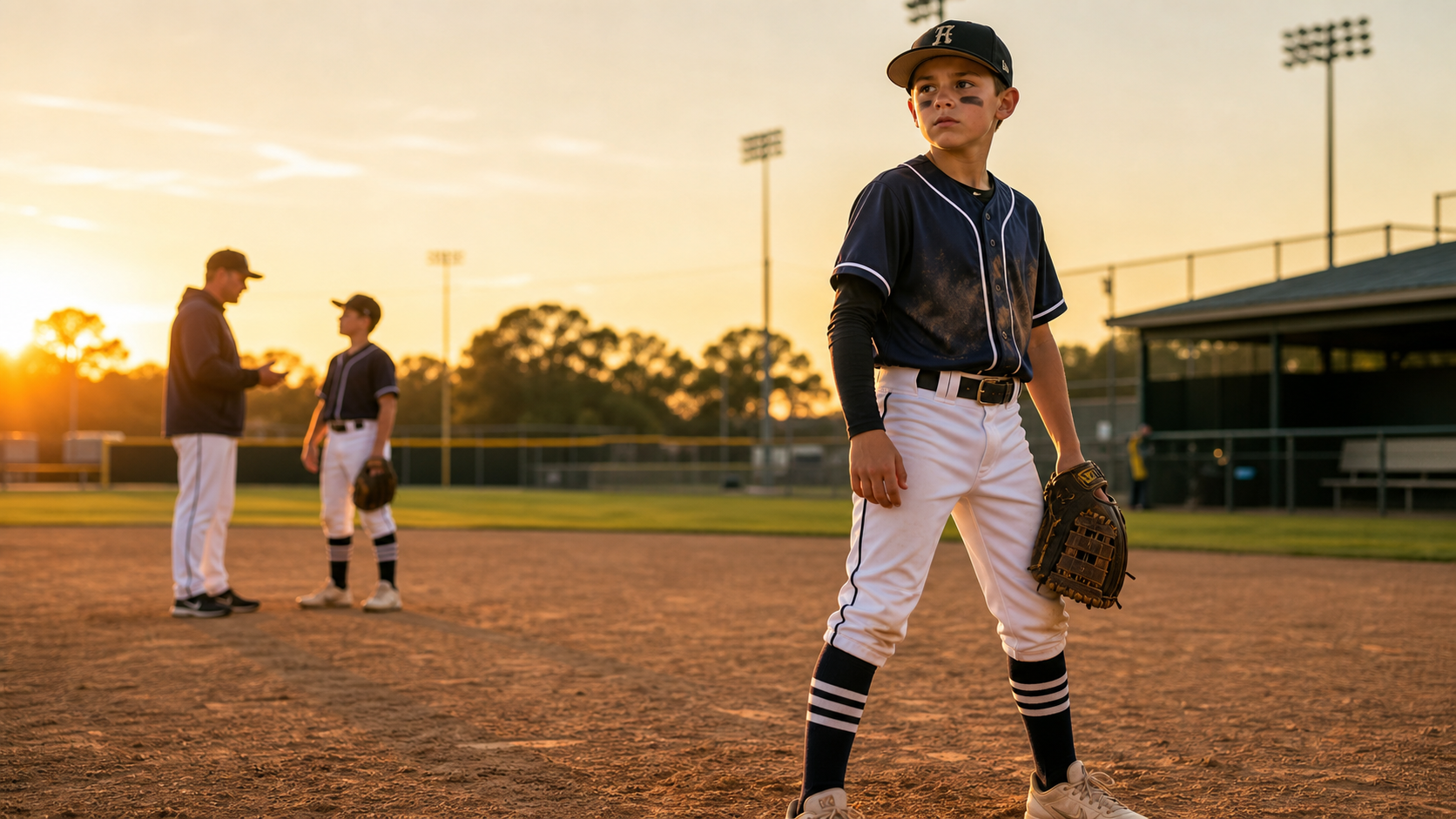
From what coaches look for to what your kid should bring — how to walk into tryout day prepared
Turn2 Team
Turn2 Threads Team
Travel baseball tryouts are one of the most stressful days of the year for youth baseball families. Your kid is nervous. You're nervous. The coach is watching everything — the swing, the throw, the speed, the attitude. And the whole thing happens in about 90 minutes.
I've been through tryouts as a parent and watched dozens of them as a coach. This guide covers exactly what to expect, how to prepare your kid, what coaches are actually looking for, and the questions you should ask before you commit to a team.
The Bottom Line Up Front
Most travel baseball tryouts happen in July and August for the following spring season. Your kid will be evaluated on hitting, fielding, throwing, pitching (if applicable), and running. Coaches are looking for skill, coachability, and effort — in that order. The best thing you can do is prepare early and stay calm.
Most travel baseball organizations hold tryouts in July and August for the following spring season. Some hold fall tryouts (September-October) for teams that play fall ball. A few organizations hold winter tryouts (January-February) to fill roster spots left by players who moved up or quit.
Key dates to know:
Parent tip: Mark your calendar for June. Most tryout announcements go out 4-6 weeks before the tryout date. Follow local travel baseball organizations on Facebook to get notified.
Your kid needs to show up ready to play. Here's the checklist:
Parent tip: Don't bring brand new equipment to tryouts. A kid who shows up with a $500 bat they've never swung will look worse than a kid with a $100 bat they've used all season. Familiarity matters more than flash.
Every coach evaluates differently, but most use a standard rubric. Here's what they're looking for, in order of importance:
This is the most important skill at tryouts. Coaches want to see:
What coaches notice: A player who takes a good swing at a bad pitch and fouls it off is more impressive than a player who watches a good pitch go by. Coaches want hitters who are aggressive in the zone.
Coaches want to see clean, consistent defense:
What coaches notice: A player who makes a routine play look easy is more valuable than a player who makes a spectacular play but boots the routine ones. Consistency beats flash.
Most tryouts include a 60-yard dash or home-to-first sprint:
What coaches notice: Speed can't be taught. A fast player has a natural advantage. But a player who runs hard on every play — even groundouts — will be noticed more than a fast player who jogs.
If your kid wants to pitch, they'll throw a bullpen session:
What coaches notice: Command matters more than velocity at the youth level. A pitcher who throws 65 mph and hits the strike zone consistently is more valuable than a pitcher who throws 70 mph and walks everyone.
This is the hidden factor that can make or break a tryout:
What coaches notice: A coach would rather take a slightly less skilled player with a great attitude than a talented player who's difficult to coach. Attitude problems spread to the rest of the team. Coaches know this.
1. Start preparing 4-6 weeks before. Don't wait until the week before. Get them to the batting cages, work on fielding drills, and make sure they're in baseball shape.
2. Practice the tryout format. Most tryouts follow the same pattern: warmup, infield/outfield, batting practice, running. Run through this sequence at home so they know what to expect.
3. Focus on the fundamentals. Don't try to teach them a new swing the week before tryouts. Polish what they already do well. A clean, consistent swing beats a new, awkward one.
4. Get good sleep the night before. This sounds obvious, but tryouts are often early morning. A well-rested kid performs better than a tired one.
5. Arrive early. Show up 30 minutes before the tryout starts. Give your kid time to warm up, stretch, and get comfortable with the field.
6. Keep it fun. Your kid will pick up on your stress. If you're nervous, they'll be nervous. Remind them that tryouts are just another baseball game. The goal is to have fun and show what they can do.
Making the team is only half the battle. Before you commit, ask the coach these questions:
1. What's the full cost? Get a complete breakdown — team fees, tournament fees, uniforms, warmups, travel. If they can't give you a number, that's a red flag.
2. How many tournaments do you play? 8-12 is typical. More than 15 means a lot of weekends away. Fewer than 6 means you might not get enough playing time.
3. How far do you travel? Local (within 1 hour) is ideal for 8U-12U. Regional (1-3 hours) is common for 13U+. National (fly-in) is for elite showcase teams.
4. How much playing time does each player get? Some teams guarantee equal playing time in pool play. Others play the best players in bracket play. Know which philosophy the coach follows.
5. How many practices per week? 2-3 is typical. More than 3 might be too much for school-year schedules. Fewer than 1 per week means the team isn't serious about development.
6. What's the coaching philosophy? Is the focus on winning or development? Both are valid, but you need to know which one you're signing up for.
7. Can I talk to a current parent? This is the most important question. A current parent will tell you the truth about the team — the good, the bad, and the expensive.
Most coaches make decisions within 24-48 hours. You'll typically get a call or email with one of three outcomes:
Made the team: Congratulations! You'll get details about the next steps — uniform fitting, team fees, practice schedule, and tournament calendar.
Waitlisted: The coach liked your kid but doesn't have a roster spot yet. Stay positive and keep practicing. Spots open up when other players decide to join different teams.
Didn't make it: This stings, but it's not the end. Ask the coach for honest feedback: "What does my kid need to work on?" Most coaches will give you a straight answer. Use it as motivation for the next tryout.
Parent tip: If your kid doesn't make the team, don't badmouth the coach or the organization. Your kid is watching how you handle disappointment. Model resilience, not bitterness.
Check out our Travel Baseball Cost Guide to budget for the season, and our Equipment Guide to make sure your kid has the right gear.
Shop Turn2 Threads Gear →Most organizations start at 8U (7-8 years old). Some start at 9U. A few elite programs start at 7U. If your kid is 6 or younger, rec ball or T-ball is the right place to start.
Most tryouts run 90 minutes to 2 hours. The first 15-20 minutes are warmup and stretching. The next 60-90 minutes are the evaluation drills. The last 5-10 minutes are for questions and announcements.
It varies widely. A popular organization might have 30-50 kids trying out for 10-12 roster spots. A smaller organization might have 15-20 kids for 10-12 spots. The more competitive the program, the more kids will try out.
Yes — absolutely. Try out for 3-5 teams if possible. This gives your kid experience with different tryout formats and gives you options if the first choice doesn't work out. Just make sure the tryout dates don't conflict.
Nerves are normal. The best remedy is preparation and practice. Run through the tryout format at home. Remind them that coaches are looking for effort and attitude, not perfection. And tell them to take a deep breath before each rep — it actually helps.

$24.99

$54.99

$29.99
Whether you're in the dugout or the stands, Turn2 Threads has the gear to match your baseball lifestyle. Check out our latest drops.
Join our newsletter for gear guides, tournament tips, and exclusive drops from Turn2 Threads.
The official Cooperstown Dreams Park packing list tells you how many baseball pants to bring. It does not tell you about the group showers, the walking, or the fact that your kid will trade away his best pin on day one. Here's the packing list written by families who have already been.
Confused when your kid talks about hitting tanks, throwing cheese, or rocking lettuce? This baseball slang dictionary helps travel ball parents understand the language of youth baseball in 2026.
From dingers to tanks to nukes, here's what today's young hitters are saying and why exit velocity is everything.